
Read Mark Weaver's Latest Op-Ed on the Bill Cosby Trial
Here's Mark Weaver's latest op-ed column, this one published in the Cincinnati Enquirer. Topic: the Bill Cosby trial and Cosby's false defense of racism. Click here or read below:
Cosby trial may worsen racial divide
By Mark R. Weaver
While I happily practice law here in Ohio, this week my mind goes back to my days as a young attorney in suburban Philadelphia. In the Pennsylvania county and courthouse where I first practiced law, Bill Cosby is now on trial for what could essentially be a life sentence following charges of sexual assault.
The man once known as “America’s Dad” is accused of being America’s rapist. These are ugly allegations and the details and legal rhetoric may get uglier.
I’ve prosecuted cases here in southwest Ohio, including many charges of sexual assault. No matter what the outcome, everyone emerges from these matters somewhat worse for wear. Victims, who must publicly recount painful details, end up stressed and distressed. Defendants – even those who emerge acquitted – often find their lives and personal relationships overturned like a five-car pileup.
Cosby is, of course, presumed innocent in the court of law. We must respect that.
Just as certainly, however, Cosby has already been tried and convicted in the court of public opinion. This court differs drastically from the one we find beyond the marble columns at the local courthouse. Unlike a court of law, the court of public opinion has no rules concerning what evidence is admissible.
In court, hearsay is typically forbidden. In the press, it’s ubiquitous.
At trial, accusers are subject to rigorous cross-examination. In the news cycle, allegations are often presumed true, simply because the victim states them with such emotional emphasis.
Anonymous testimony is forbidden in our justice system. In news stories, journalists claim a certain cache and credibility by featuring “well placed” anonymous sources.
If a lawyer tells a jury something out of line, the judge can respond by telling jurors to ignore it or finding the lawyer in contempt. Appearing live on TV, lawyers are largely free to make claims unchallenged and the legal ramifications are less restrictive.
And while there’s only one judge in the court of law, there are millions of judges in the court of public opinion.
These are the hallmarks of the American justice system and public opinion in 2017, but – as unappetizing as this daily fare may be – I fear we will see something much more pernicious in the Cosby case.
In a national radio interview, Cosby publicly blamed racism for his own questionable behavior. Even if he didn’t violate laws, the actions he’s acknowledged are enough for polite society to rebuff him. No racist urged him into intimate moments with women not his wife, and no bigot procured the drugs that quickly reduce a woman to an unconscious target of rape.
When I worked in the Civil Rights Division of the U.S. Department of Justice, I saw unsettling instances of racism in America. We must all stipulate that, when prejudice arises, people of good will and those who strive for the moral law must confront and condemn it. But just as disquieting are those who cry racism with the carelessness of the boy who cried wolf. Call it diversion by defamation. This slander is its own unique brand of hate.
If Cosby tries to blame his situation on race, it will be despicable. History’s account of racism in America is rife with the vilest of deeds. Indeed, racism still exists at an attenuated level. But those matters are separate from the issues in the Cosby case.
We saw a corollary to this just last week. Self-described “D-list” celebrity Kathy Griffin inexcusably mocked the president with an ISIS-style beheading simulation. Her actions were well beyond even the off-ramps of the acceptable traffic lanes of American political discourse. Yet, when called to account, rather than accept responsibility, she claimed sexism by those who were disgusted by a display that would insult second-year students to describe as sophomoric.
People who break the law or shock the conscience of society are fully responsible for what they do. Deflecting blame by pushing society’s hottest of hot buttons is wrong. The use of sexism or racism as an all-purpose defense or shield from shame by the malevolent must stop.
In the 1980s, Cosby helped us have constructive discussions about race. Dr. Cliff Huxtable, sporting a goofy sweater, encouraged us to understand the nuances of race at a time when many were uncomfortable with changing societal norms.
If Cosby continues to raise a spurious specter of race to defend sexual assault, he will further exacerbate complex issues of race in this country. In doing so, he will increase his likelihood of conviction in a court of law, while simultaneously earning the enmity of his countrymen in the court of public opinion.
Mark R. Weaver is a Columbus attorney and former deputy attorney general of Ohio. He teaches at The Ohio State University College of Law and his new book is “A Wordsmith’s Work.” Twitter: @MarkRWeaver.
Mark Weaver's Op-Ed Inspired by the Women's March
Today the Columbus Dispatch newspaper published an op-ed from Mark Weaver of our team. In this essay, Mark addresses the view among many in the news media that women all think alike and how that misconception drove coverage of the "Women's March." Click here or read below:
Women’s political views range across the spectrum
By Mark R. Weaver
This week, millions of women rejoiced at the inauguration of Donald Trump, many of them trekking to Washington to be heard. Other women, also in the millions, decried President Trump’s ascension to power, some also heading to the nation’s capital or nearby venues to protest. What do these women — or women in general — have in common? Almost nothing. And, when it comes to politics, that’s a good thing.
For example, nearly every poll tells us that women are about equally split on whether they identify as pro-life or pro-choice on abortion. There’s no “women’s position” on that issue, or, for that matter, any issue. Every issue is a woman’s issue — and a man’s issue. And, while there’s a “gender gap” in some election results, factors like race, locale, and age are much stronger predictors of partisan leanings than a voter’s sex.
Even if a stray issue here or there does show a marginal difference between attitudes of men and women, there’s no intellectually honest claim that women’s views are monolithic. Yet news media coverage often suggests otherwise.
As my byline suggests, I’m not a woman. But the notion that only women can accurately analyze the views of women and politics is as wrongheaded and over-simplistic as the assumption that women are some odd species whose attitudes are fully in sync. Nowhere is that common fallacy more destructive than politics and policymaking.
When people who make laws believe that women think one way and men another, the result can be regulations that perpetuate a Balkanization of the sexes. In a nation where our motto is “from many, one” we must strive to turn away from this direction lest we all become denizens of division. Indeed, identity politics should have no place in a country where the only relevant identity is being American.
Several times a year, I speak at women’s leadership conferences. I help develop opportunities for young women to be more involved in public affairs and government. I was proud to see my wife and daughter become active in these programs and glad to see others benefit from them as well. I support these efforts not because women have a unique voice that must be heard. Female perspectives are multiple and varied, not uniform. To claim otherwise is to diminish women’s role as equal partners in politics.
So, women ought to be involved in the process of self-governance not because there’s a “woman’s viewpoint,” but because when we’re all in it together, our decisions are usually better. When women — conservative, moderate, and liberal — are less involved in a government of, by, and for the people, the resolutions of our republic may be rejected. Indeed, it was Founding Mother Abigail Adams who reminded her husband John that women “will not hold ourselves bound by any laws in which we have no voice or representation.”
Years ago, I moved to Ohio to work as the deputy attorney general for Betty Montgomery — the first woman elected as our state attorney general. Yet her place in history was secured by her character, vision, and dedication to this state. Her gender was more footnote than foundation.
Electing a woman simply because she’s a woman is as ill-considered and small-minded as voting against a woman for the same reason. And as we enter the era of President Trump, one-dimensional views of whether women support or oppose his policies have the ironic effect of advancing that which so many feminists reject: the notion that women should be of one mind on anything. Politically speaking, men are complicated. It’s not breaking news that women are, as well.
Women, whether in the era of Obama or Trump, should march on Washington to counter leaders and legislation they oppose. But that burden of representative democracy also falls to men. Americans are the shareholders of this nation and we ought not be silent partners in it. And this mandate applies without regard to gender, since the chromosomes of our body matter infinitely less than the DNA of our democracy.
Mark R. Weaver is an attorney and communications consultant in Ohio. His written work and book is featured at www.AWordsmithsWork.com Twitter: @MarkRWeaver
The Columbus Dispatch: College students should be treated as adults
College students are dizzy in the whirlwind of change from the teenage drama years to the vastly different burdens and joys of adulthood. Payers of tuition, parents and students alike, expect university officials to be wise Sherpas, accompanying those students along that rocky climb. Yet recent incidents at the University of Missouri, Ithaca College and Yale University have shown that those who lead many of our colleges and universities are failing in their responsibilities.
My perspective on this is manifold and sweeps over several decades. As a student-government leader at a large state university, I negotiated with administrators and trustees over student demands. In graduate school, I was the resident director in charge of two large freshman dormitories. Today, I teach at three major universities and my two children are college students.
Every aspect of university life is, and ought to be, a learning experience. Ideas of every type should be discussed, debated, and considered during these years that are made for acquiring the knowledge that will guide and govern the travails of life. But there’s a dichotomy that sets the table for the trouble we’re seeing today.
When it comes to issues such as alcohol use, sexual activity and political participation, many college students desperately want to be treated like hardy adults. But those who demand “safe space” and college-enforced protection from offensive words or ideas incongruently are asking university officials to treat them like fragile children.
These paradoxes shouldn’t surprise us. Research shows that the human brain doesn’t fully develop until age 25. For that reason, our call for redress should primarily be aimed at those who’ve been educated and trained to help young adults thrive and mature in a college setting. Yet it’s precisely those administrators who too often seem to be paragons of pusillanimity when this challenge calls for them to be people of principle.
The most glaring example of this is Timothy Wolfe, who resigned as the president of the University of Missouri under pressure from a losing football team refusing to play, a fraction of the student body boycotting classes, and a solitary student declaring he would not eat until the president resigned. The entire offbeat episode evoked the unmistakable analogy of a toddler threatening to hold his breath until he gets his own way.
None of this is to say that some of the issues raised by the students, such as issues of racial division or social unrest, are unserious or unworthy of substantive debate. Rather, the notion that students with grievances — perceived or actual — claiming the forced resignation of a university president as a trophy should be as offensive to those of us who revere higher education as the poaching of Cecil the lion was to those who love animals.
And lost in the noisy swirl of chants, declarations of being offended and accusations of so-called micro-aggressions is a larger, more durable concern. At least at public universities, which are unequivocally bound by the restraints of the U.S. Constitution, the willingness of the army of the aggrieved to deny the value and applicability of First Amendment free-speech protections is deeply troubling.
One student leader at the University of Missouri gave a national television interview in which she declared that she was tired of those who cite to the First Amendment as a reason why she might have to allow others to speak. Funny thing about the Constitution: it’s not optional.
Such a misshapen view of basic American tenets is a prime opportunity for college leaders to step in and advocate for civil dialogue from all sides. Yet, as resignations hung in the air, most were too intimidated to do so.
I’ve taught hundreds of students over the years. I’ve learned as much from them as they did from me. Our exchange of information took place in and out of the classroom on a wide variety of topics, some of which were nowhere in my syllabus.
Foremost in my mind in those interactions was the hope that these young people could get something from my class that would better prepare them for the vexing challenges that awaited them beyond the wide green expanses and metaphorical training wheels of campus life.
University leaders must not shrink from their duties to be the rock of principle in a rushing stream of anger, confusion and unrest. Students won’t always like it when they don’t get all they ask for. But they will learn a great deal about the real world of family life and career where angry demands are not always met and shouted grievances are often rebuffed.
###
Mark R. Weaver is a Columbus attorney who teaches at The Ohio State University Moritz College of Law, the University of Akron, and the School of Government at the University of North Carolina, Chapel Hill.
Columbus Monthly: Meet the Olivia Popes of Columbus
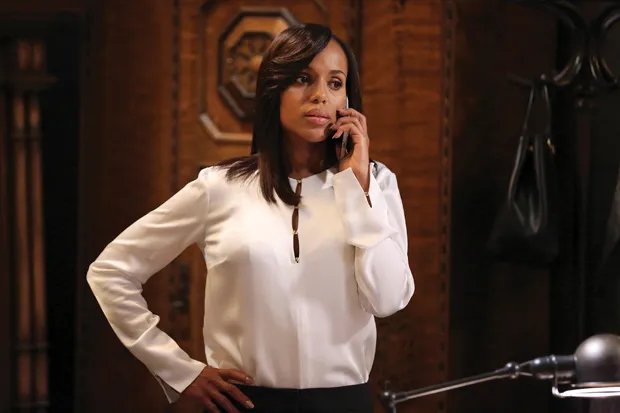
Though ABC’s “Scandal” is about as dramatized as they come, the premise of the primetime show, now in its fourth season, is based on reality. Inspired by Judy Smith of Smith & Co., a DC crisis management firm, the show follows Olivia Pope (Kerry Washington) and her firm, Olivia Pope & Associates, as they usher high-profile clients through crises like public scandals in which a politician’s reputation is at stake.
“In the last 15 years or so, crisis communications has become its own profession,” says Mark Weaver of Communications Counsel. “Before that, you would go to a public relations firm or go to an advertising agency and hope they had experience with crises.” Though their work doesn’t have the same Hollywood spin as Olivia Pope’s, Columbus has its share of PR professionals who specialize in crisis communications.
MARK WEAVER
A few years ago, the city of Steubenville, Ohio, hired Communications Counsel when news broke that one of their high school students had been sexually assaulted by two football players. “The city manager knew that the reputation of Steubenville was at risk,” says Weaver, who was the deputy attorney general of Ohio before founding his firm. “Most people around the country had never heard of Steubenville, Ohio, and the first time they were hearing about it was this very negative story.” Weaver created steubenvillefacts.org (which is no longer active) to try to set the record straight about the city and the incident. A media law and litigation lawyer, Weaver and his firm do PR, advertising and crisis communications for 12 to 20 clients, including two members of Congress. Says Weaver, “We help people at the intersection of law, government and media.” communicationscounsel.com
HINDA MITCHELL
Hinda Mitchell has 20 years of PR experience, dealing with crises including work injuries and the 2010 Iowa egg recall. She founded Inspire PR Group last July; about 20 percent of the firm’s work falls in the crisis management category, she says. Work with corporate companies, especially in the food and health care industries, as well as nonprofits, takes Mitchell and her team around the country, and sometimes around the world. “It has been my experience that very few crises happen between 9 and 5, Monday through Friday,” says Mitchell, whose daughter is a “Scandal” fan and likens Olivia’s “fixer” mentality to her mom. “There are so many moving parts at the time of a crisis, there’s no one superhuman who can do it all. We all need our own gladiators.”inspireprgroup.com
BILL PATTERSON
An industry veteran, Bill Patterson started his career in broadcasting and in 1998 founded Reputation Management Associates. Patterson hosted media relations workshops and worked with hundreds of clients, he says, including E. Gordon Gee, former Gov. Bob Taft, banks and hospitals, counseling them on effectively communicating to the public and press. “In my career, I’ve dealt with every crisis you can dream of, from chemical leaks to people who told lies,” he says. “One day, I got a call in the afternoon that a crane had cut a woman in half. I said, ‘You want me to handle it, then do what I tell you.’” Patterson wrote a statement for the company whose equipment was involved and advised the company’s president to lower their American flag to half-staff and send someone to stay with the family of the woman. “Sometimes you can recommend just the tiniest thing to have a big impact,” he says. Though now retired, Patterson still occasionally advises Anthony Huey, who’s now president of Reputation Management Associates. media-relations.com