
bank-phrom-Tzm3Oyu_6sk-unsplash.jpeg

News

Cincinnati Enquirer: Misdeeds in Smollett case undermine faith in justice

On Sunday mornings, in churches across America, many of us count on ministers of the gospel to use their influential positions to strengthen people’s faith. We know all too well that recent religious scandals have weakened confidence in this foundational institution.

On the other days of the week, in the courthouses of our country, we have similar expectations of a different kind of minister – prosecutors. In Ohio and other states, prosecuting attorneys are governed by ethics rules that identify them as "ministers of justice." While their pursuit is secular, we still rely on them to do the right thing. When they don’t, our faith in the legal system is shaken.

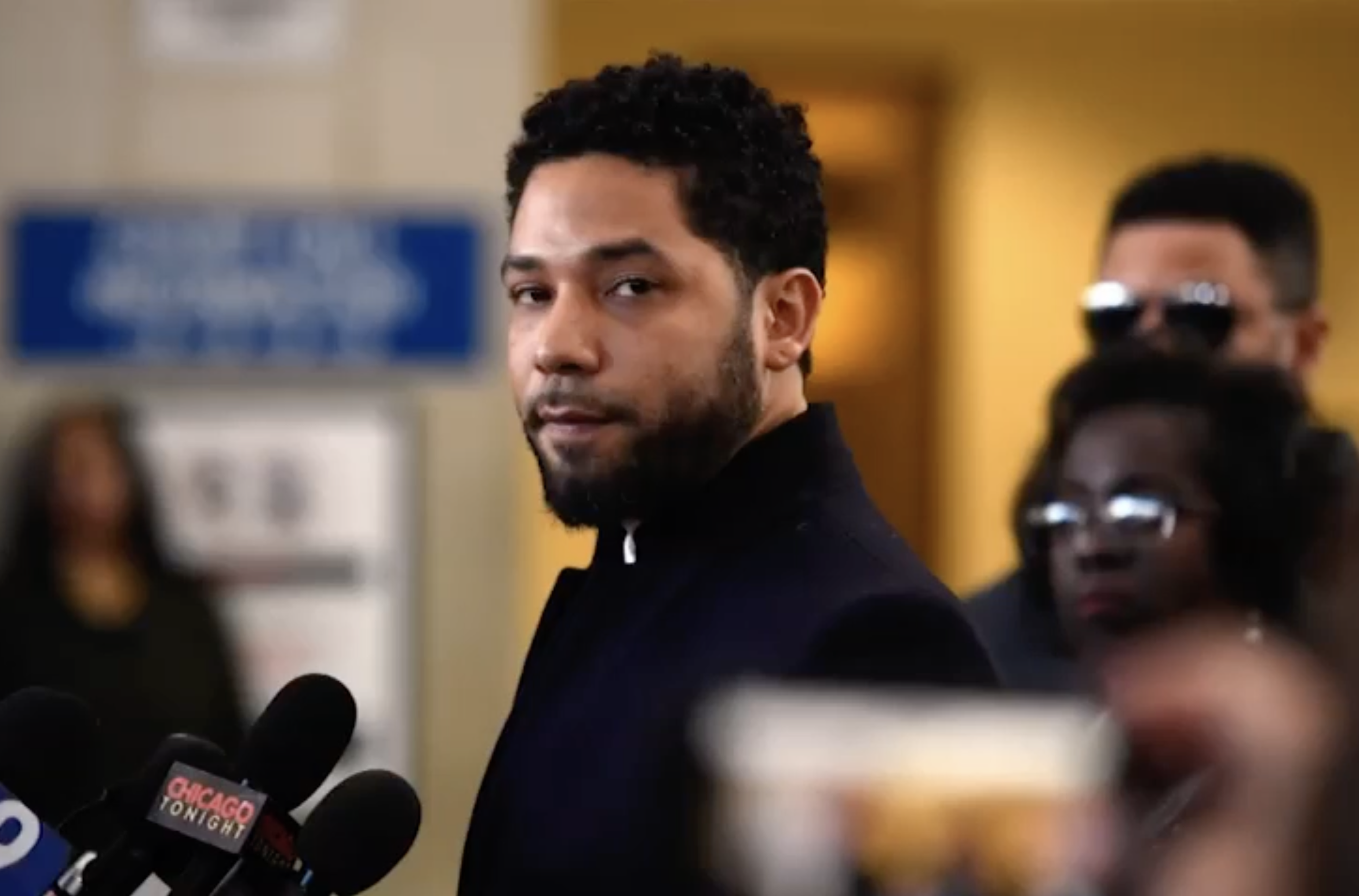
Sadly, the actions of Chicago prosecutors in the Jussie Smollett have cast deep doubt and raised vexing questions about access to justice. We’re all now left to wonder whether political influence and undue deference to celebrity can tilt the scales of justice in a fashion otherwise unavailable to an accountant in Avondale or a waitress in Walnut Hills.

As an Ohio prosecutor, I’ve made tough decisions about which suspects should face charges and which ones deserve a pass. Criticism of these assessments is easy to launch. Having been on the receiving end of such scrutiny, I hesitate to indulge. But the Smollett dismissal is such an outlier and perversion of prosecutorial discretion, it must be addressed.

In Ohio, hundreds of criminal charges are dismissed every day. Utilizing a process called "diversion," prosecutors make a determination that a defendant in a low-level criminal matter has learned his or her lesson and is unworthy of a full-blown trial and undeserving of a conviction. But there’s a key precursor to these dismissals.

A 2017 survey of diversion programs in Illinois by the Center for Health and Justice found that diversion programs that take place after a person has been charged with a crime "generally require a guilty plea and associated documentation to participate." And for those diversions that don’t require a guilty plea, the prosecutor expects a defendant to show contrition of some sort.

The unabashed public denial issued by Jussie Smollett following his dismissal was far from contrition. The actor regurgitated his initial false claims, thereby exposing the lack of merit in the local prosecutor’s decision. I don’t know much about the character Smollett plays on TV, but his portrayal of a victim deserves a trip back to acting school.

As we look even closer, we see more rot in the floorboards of this dismissal. According to a 2016 New York Times investigation, diversion typically is offered only in minor cases like shoplifting, drug possession, and petty theft. That conclusion is consistent with my years of work in the court system. Voluntary dismissals of multiple felonies – particularly involving serious matters like hate crimes, falsification, and abusing legal process – are rare. 

The mishandling of this matter involves much more than whether a hate crime huckster avoids responsibility for his heinous hoax. It’s become Exhibit Z – perhaps the last bit of testimony – in the case that Americans have against public officials who fail to abide by their oath of office.

The final verdict is easy to predict: ministers of justice who forgive the legal sins of the powerful while recommending the wrath of punishment for the powerless simply have no place in a temple of trust.

Columbus attorney Mark R. Weaver is the former deputy attorney general of Ohio and has worked as a prosecutor for two decades, including prosecuting public officials, child molesters and murderers. He is the author of the book “A Wordsmith’s Work.” Twitter: @MarkRWeaver.
Mark Weaver
Cincinnati Enquirer: Cringeworthy, yes - but criminal?

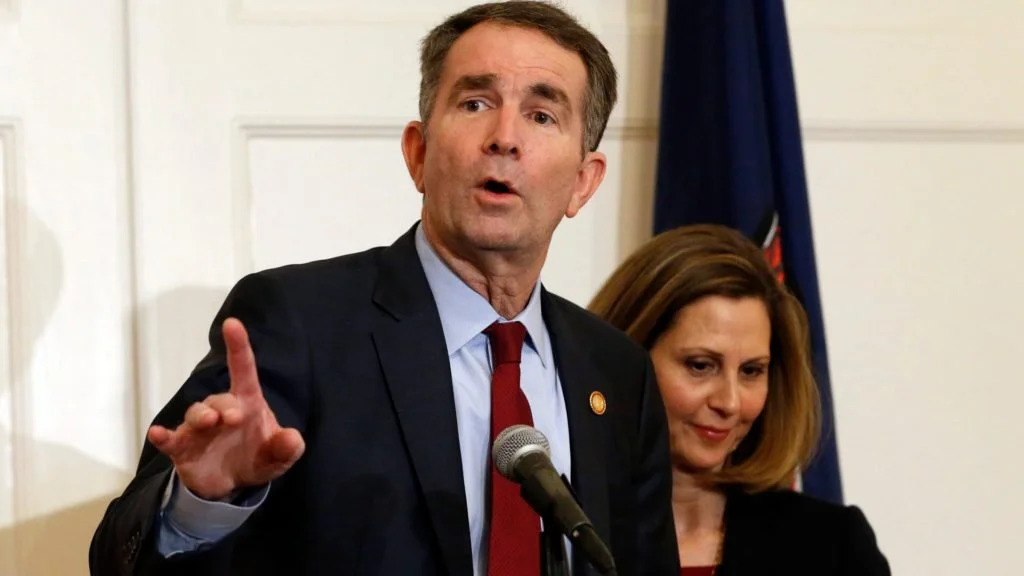
Virginia Governor Ralph Northam recently admitted to the crime of offending people by wearing blackface on at least one previous occasion. Based on this admission, leaders in both political parties insist he resign.

Setting aside Northam’s situation, in this era of ceaseless offense at a wide variety of speech and conduct, the more reflective among us ought to ponder whether it might be more sensible to have a measuring stick for who should resign and who should remain, rather than making it up as we go along.

Which past conduct is disqualifying from future public office? Think about the biggest mistake you made in your younger years. Assuming you’re now embarrassed by it and have repented or sought forgiveness, should your misstep stop you from holding a position of public trust?

In my work as a crisis communications consultant and public law attorney, I’ve sat with hundreds of government leaders who’ve disclosed to me their weakest and darkest moments from their past. Drunk driving, drug use, affairs, financial misdeeds, and academic dishonesty are among these cringeworthy admissions.

They wonder whether the revelation of these character blemishes will be used against them. Lamentably, this is the currency of modern political campaign discourse.

I offer no opinion on whether Gov. Northam has done enough good in his middle age to offset the foolishness of his younger days. But I do know he doesn’t stand alone under scrutiny.

Martin Luther King, Jr. is rightfully an American hero. Yet he despicably cheated on his wife and improperly plagiarized his doctoral dissertation. Should he have resigned from his civil right leadership role?

George W. Bush served honorably in government. But, as a young man, he was convicted of drunk driving, a reprehensible crime that endangers others. Should that have been enough for him to be forced from his elected positions?

Barack Obama made history when he was elected president. Yet in his autobiography, he admitted to youthful cocaine use, which is a felony punishable by prison time. Did this serious crime make him ineligible to hold office?

Finally, most infamously, long-time West Virginia Senator Robert Byrd was a leader of the Ku Klux Klan. His affiliation was legal but odious. Was this enough to require his voluntary departure from his safe Senate perch?

History tells us that these misdeeds were not to force any of these leaders into private life. 

When Gov. Northam met reporters earlier this week, one persistent question he faced concerned the notion that the practice of blackface offends many African-Americans. That’s certainly true. The question remains, is a legal but offensive act more discreditable than committing a felony (like Obama) or a dangerous crime (like Bush)?

And, if causing offense is the trigger for forced resignations, then what of those public officials who take the Lord’s name in vain in profane curses? This offends millions of Jews and Christians. Ought there be a call for such blasphemers to step down from government posts?

Other examples burst forth like so many sizzling popcorn kernels. No doubt some of our leaders were bullies in high school. Some may have cruelly mistreated animals. Others viciously spread lies and false rumors about rivals. All of these acts are offensive and potentially illegal.

The cleanest way to bring clarity to this question would be to allow voters to remove such scoundrels at the next opportunity to cast a ballot. This democratic process is embedded in our republic.

I don’t propose to stifle the more informal process that has done the trick in recent years. Political pressure short of an election defeat chased from office such wrongdoers as Senator Al Franken, New York Attorney General Eric Schneiderman, and – here in Ohio – Attorney General Marc Dann. All jumped before being pushed. 

Yet a more coherent and agreed upon standard would serve us all well. My recommendation would be that criminal conduct is more troublesome than legal and offensive activity while in a leadership role is more troubling than that in the past.

The Supreme Court once sought to define obscenity with the ridiculously subjective standard of "I know it when I see it." Then – and now – when that sort of analysis prevails, the tyranny of feelings replaces the steady reign of reason.

Mark R. Weaver is a Columbus attorney and crisis communications consultant. He was formerly spokesman for the civil rights division of the U.S. Department of Justice. He is the author of the book "A Wordsmith’s Work." Twitter: @MarkRWeaver

Mark Weaver
The Columbus Dispatch: Status of special counsel raises some issues

Ohio winters remind us that water has three forms — the hot liquid we drink, the steam we exhale and the ice we clear from the driveway. Federal government power is similarly constituted in three different ways, between the legislative, executive and judicial branches.

At the Constitutional Convention of 1787, the Founding Fathers wrestled with how to fairly distribute power among government actors. The notion of power resting in one entity evoked painful memories of the royal yoke these leaders had recently thrown off their countrymen. They resolved the problem by distributing federal lawmaking power to Congress, the execution of those laws to the president and the authority to resolve constitutional disputes to the courts.

Which leads to the question of whether a president has the authority to fire a special prosecutor or appoint an attorney general who may forestall a special prosecution. Some claim that “rule of law” prevents a president from doing so. Like the first glaze over a freezing pond, this position may seem substantial at first glance, but a few tentative steps reveal cracks in the support.

Unfortunately, amid the latest season of “Let’s All Fight About Trump,” calm discussions about presidential power get whipped into political catcalling.

These issues existed before the Obama and Trump follies and will continue thereafter. The Constitution gives all executive-branch authority to one person — currently, Donald Trump. All executive-branch officials, from the lowest file clerk to a four-star general, derive their power from the president’s will and can be stripped of that power on the president’s whim. Only the most limber of legal yoga practitioners can twist the straight iron rod of executive-branch power into the pretzel notion that such power belongs to someone other than the executive himself.

It may feel like a conflict to acknowledge that a president can fire an attorney general or a special prosecutor poking around in his political attic. Yet the Constitution permits it.

Indeed, other branches have constitutionally permitted conflicts. A congressman speaking on the House floor can defame and falsely ruin the reputation of a private citizen. Yet the Constitution protects that official from lawsuit or prosecution.

And when a legal dispute emerges surrounding the pay raises of the members of the Supreme Court, the justices themselves are permitted — indeed required — to resolve it. The conflict is manifestly constitutional.

Lest you think that a president’s decision to fire a special prosecutor would have no check or balance, it’s crucial to remember that, in constitutional physics, every government action has an equal and opposite reaction. In response to presidential powers of appointment and termination, Congress maintains the powers of confirmation, budgeting and even impeachment. And, for cases properly brought, the Supreme Court may judicially review.

Some suggest notions of propriety or long-held custom require us to find another way forward. But ignoring the express mandate of the Constitution to step around the pothole of a mere conflict trips the traveler into the adjacent abyss of anarchy.

One of history’s greatest Ohioans — Chief Justice William Howard Taft — wrote in a landmark decision about executive power, “the President is empowered by the Constitution to remove any executive officer appointed by him.” Yes, this includes firing Deputy Attorney General Rod Rosenstein or special counsel Robert Mueller.

I’ve worked as a special prosecutor in a dozen Ohio counties. I’m familiar with the political pressures that come with the territory. And, when I served as a presidential appointee at the Justice Department in Washington, I saw how the attorney general wields power. Yet the origin of that power is the president.

We can disagree and take political actions when a president exercises his powers. But we should not — and cannot — claim he lacks the power to do so.

After all, our founding document contains more than just helpful hints. These are the powerful and compulsory tenets of a nation of laws. In a republic such as ours, the Constitution is no parchment tiger.

Mark R. Weaver is a Columbus attorney and communications adviser. He was formerly deputy attorney general of Ohio. He is the author of the recently released book "A Wordsmith's Work." @MarkRWeaver

Mark Weaver
Cincinnati Enquirer: Kavanaugh allegation wouldn't hold up in court

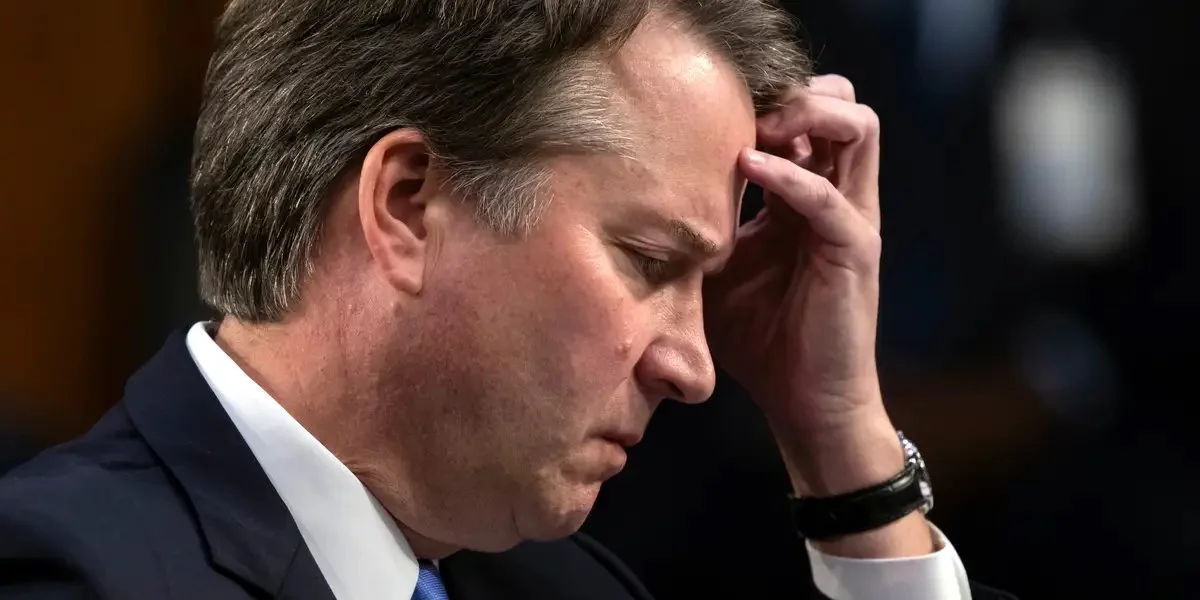
Just when you thought the Supreme Court nomination process couldn’t get any more partisan or divisive, Washington pulsates with a new level of political pandemonium. Christine Blasey Ford now claims nominee Judge Brett Kavanaugh attempted to grope her at a drunken high school party in 1982. If she’s telling the truth, it was an inexcusable criminal act. If she’s not, it’s a despicable political smear. 

As a prosecutor, I’ve often reviewed allegations like this, to determine whether charges should be brought. Typically, filing a criminal case nearly four decades after an incident is all but impossible, either since the applicable statute of limitations bars prosecution or because of a scarcity of corroborating witnesses who can testify clearly and convincingly. If I do bring a case, I have a high burden of proof.

But the burden of proof in politics is largely amorphous in a polarized environment where tribal instincts overthrow logic and cool consideration. With the Kavanaugh allegation, you don’t need a weatherman to know that category five cognitive dissonance will bring a storm surge of partisan-driven conclusions. While we’re all entitled to have our own view about whether this stale accusation is true, spouting opinions is easy and discerning facts is hard. The latter is the arduous work of a prosecutor. 

When I prepare a case for indictment and trial, I must hew to the rules of evidence and the canons of ethics. These legal dictates sometimes hamper my mission and always limit my options. That’s why, when black letter law blends with the gray hues of distant memories, you can color me dubious about getting a conviction.

Obstacles to truth-finding abound here. For one, an attorney representing Ford steered her to a polygraph examiner, who deems the assault allegations genuine. While the lawyer certainly knows that notoriously unreliable lie detector data are almost always inadmissible in the court of law, political operatives recognize that polygraph results are exuberantly embraced in the court of public opinion.

Similarly, allegations in court must be made under oath, where the witness risks prison if she perjures herself. There are no so such constraints in media testimony. True or not, the more heinous the allegation, the more hyped the reporting. Clicks are acquired, ratings points are scored and public opinion begins to shift.

Claims brought to trial face a rigorous testing. After evidence is presented, the judge will tell the jury how to determine whether the assertions were proven. Jurors must use the same common sense they employ when making important life decisions like buying a car or taking a new job.

Given the court rules barring it, a jury reviewing Ford’s claim would never hear about the polygraph. And during deliberations, jurors would discuss the fact that Ford had been drinking at the time, to the point where she forgot how she got home. Common sense would lead many of them to believe that alcohol and the passage of time made her memory less reliable.

Ford’s account suggests that another young man saved her from the clutches of Kavanaugh. He specifically denies that the event ever occurred. Jurors would likely give his third-party account significant weight, changing what was a he-said, she-said narrative to a question of they said, she said.

Indeed, unless the facts, evidence, or witness list changes in the Kavanaugh conflict, a court case alleging sexual assault would probably fail. Of course, the U.S. Senate has a different standard and each senator is free to decide these issues of credibility and evidence differently. After all, advice and consent lie in the eye of the beholder.

No matter what the age or blood alcohol level, sexual assault is a heinous act. That’s why victims ought to report such crimes immediately. We should empathize with the reluctance of abused women to draw attention to an embarrassing and painful incident. Yet due process requires that claims brought forward decades later – particularly when rancorous politics is woven into the context – draw the highest level of skepticism.

Mark R. Weaver is the former deputy attorney general of Ohio. He is a lawyer and author of the book “A Wordsmith’s Work.” Twitter: @MarkRWeaver

Both the Daily Caller and the Cincinnati Enquirer published Mark Weaver's recent op-ed on the allegations against Judge Kavanaugh. Click here for the link to read.

Mark Weaver
Mark Weaver on Urban Myer Crisis

Mark Weaver from our firm was interviewed by several media outlets about the ongoing Urban Meyer crisis at Ohio State. Read below or click here.

Who is on the panel investigating Ohio State coach Urban Meyer?

By Laura A. Bischoff

COLUMBUS — 

The six-member panel appointed to investigate Ohio State Head Football Coach Urban Meyer is loaded with insiders who have watched Buckeye football games from the university suite and traveled to bowl games.

The panel includes three current trustees — Columbus Partnership chief executive Alex Fischer, business attorney Alex Shumate and hospital administrator and consultant Janet Porter — as well as former trustee Jo Ann Davidson, a well-connected Republican leader. The other two members — Craig Morford and Carter Stewart — are former U.S. Department of Justice officials.

RELATED: Urban Meyer issues statement regarding handling of domestic violence allegations

Trustees and former trustees are invited to the university suite at Ohio Stadium for home games and to travel to bowl games. Records show that Davidson, Shumate and Fischer have traveled to multiple bowl games as part of the university’s official party over the past decade. Stewart was a guest in the university’s stadium suite in 2012, records show.

“Most people in Columbus are supportive of Ohio State at some level, some more, some less. It would be unusual and difficult to cobble together a group of people that didn’t have opinions about Ohio State as an institution,” said Mark Weaver, an attorney and crisis communications consultant. “So it’s no surprise that people of this caliber would already have some involvement with Ohio State.”

He added: “This feels like a good mix to me.”

Davidson: Appointed OSU trustee by then Gov. Bob Taft, Davidson served on the board 2001 to 2010. She served 10 terms in the Ohio House and was elected speaker in 1995 — the first and only woman to hold the top legislative leadership post in the Ohio General Assembly. She runs a political consulting firm, chairs the Ohio Casino Control Commission and founded a leadership institute for up and coming Republican women. She co-chaired the Republican National Committee 2005 to 2009.

Fischer: Appointed trustee in 2014 by Gov. John Kasich, Fischer has led the Columbus Partnership since 2002 and currently is chairman of Nationwide Children’s Hospital. Previously, Fischer was an executive at Battelle, a Columbus-based research and development organization. He holds bachelor and master’s degrees from the University of Tennessee.

Morford: A former U.S. Department of Justice official who supervised 93 U.S. Attorney’s offices, Morford now directs the legal, regulatory and compliance affairs for Columbus-based Cardinal Health, a drug distributor and health care service provider with 50,000 employees in 60 countries. He earned his law degree from Valparaiso University and a bachelor’s from Hope College.

Porter: Appointed OSU trustee in 2017 by Gov. John Kasich, Porter has 40 years of experience in hospital administration and public health. In 2012, she joined Stroudwater Associates, which consults academic medical centers, specialty hospitals, drug makers and others. She holds an MBA and doctorate from University of Minnesota and a bachelor’s and masters of health administration from OSU.

Shumate: Shumate is a managing partner at Squire Patton and Boggs where he counsels clients on businesses on regulatory and legislative issues. He has been off and on the OSU board since 1989. He holds a bachelor’s from Ohio Wesleyan University and a law degree from University of Akron.

Stewart: former U.S. attorney for the southern district of Ohio, Stewart now managing director of Draper Richards Kaplan Foundation, which funds social entrepreneurs. He holds a law degree from Harvard and a master’s in education policy from Columbia and a bachelor’s degree from Stanford.

The panel hired an investigator: Mary Jo White, former chair of the U.S. Securities and Exchange Commission, former federal prosecutor for the Southern District of New York and current chair of the national law firm Debevoise & Plimpton.

The investigation is expected to be completed within 14 days, the university said on Sunday. The panel will provide advice and consultation to the full board of trustees.

After the investigation, OSU President Michael Drake will make a decision in consultation with the trustees.

Website Editor