

Granville Sentinel columnist Don Haven's witticisms remembered
Licking County lost a community voice last month. Don Haven died Dec. 28. His regular readers (both of them, as he liked to say) knew him as the semi-regular contributor who offered up countless editions of his “You Know I’m Right” columns in this newspaper. I knew him as a friend.
Don was an unapologetic patriot. He loved this country and served it proudly in the Navy. His service spanned 29 years as an enlisted sailor and later as an officer, retiring as a captain. His father, wife and daughter Jane all served in that branch as well.
A son of Iowa, he saw the world from American warships and duty stations and then got to Granville as fast as he could.
He was also the devoted husband to his wonderful wife, Debbie. He called her “my loving wife of some forty years (MLWOS40yrs),” and she was all that and more. While they more recently enjoyed time away in warmer South Carolina, this couple was involved in as many local Licking County activities and causes as anyone I know.
Both of my (now adult) children remember him as the AP History teacher at Granville High School. I didn’t know Don well back then, but he caught my attention when my daughter reported that “Mr. Haven sometimes -- in the middle of class -- opens the door to our room, rings a bell and shouts out ‘freedom!’”
This was someone I needed to know better.
In fact, during his full-time teaching (and later working as a substitute teacher) many of Don’s declarations were memorable enough that some students chronicled them for later reference. Who wouldn’t want a high school teacher who held forth with such witticisms as:
Don Haven
“If you get anything out of this reading assignment, you’re a better man than I.”
“Here’s why I don’t allow cell phones in the classroom: because I’m told that’s where children get their instructions from the devil.”
“If you see the same little old lady, homeless, with a shopping cart three times, it’s not a coincidence. You’re being tailed. It’s probably a KGB agent.”
“Who hasn’t hung around a 9-year-old and doesn’t need a taser?”
The observations in his columns were equally as compellingly comical.
When offering a tribute to the family’s departed dog, he noted, “Unlike the rest of my family, she was a great listener and was always greatly interested in what I had to say.”
The dog was not alone. Many people in our community loved, hated or just enjoyed reading his often curmudgeon-like takes on things we all confront in life. They include:
“Unnatural hair coloring. Red, purple, green, orange, and blue are not a good look for anyone. I know this is America and we can dress the way we want, but let’s have some standards here.”
“Blister packs are the absolute worst. I have an extensive pocketknife collection, but do I need to carry a weapon just to get at my vitamins?”
And every golfer can relate to his laments about how hard it is to excel in the game: “I too have taken lessons, with four different instructors; one quit golf altogether, one suggested I might be better at pickleball, one told me I needed a handicap sticker on my car (very funny), and the last has not been heard from since my last lesson.”
If you knew Don, he made you smile every time you saw him. And, as a faithful Christian and elder at First Presbyterian Church in Granville, he frequently put the gospel into action. My family was honored when he agreed to be the sponsor of my son’s baptism.
You can read much of his work at tinyurl.com/HavenColumns. Whether you agree with his perspective or not, everyone can appreciate his civil, thoughtful, and amusing take on life.
Don’s business card simply featured a U.S. flag, his contact information and the one description that mattered to him most: “Don Haven – American.”
He rang the bell for freedom and lived a life anchored in faith. Heaven welcomed him home, and Granville feels the void. You know I’m right.
Mark R. Weaver is a local attorney and author.
Was the Minnesota ICE Shooting Justified?
Civics class taught us that elected members of Congress enact our laws. The president — through his appointees and their employees — then executes these policy choices. Law enforcement officers (as the name suggests) enforce these laws. Their job is to do so, whether or not they support the law. Passing laws is subject to debate, but enforcing laws isn’t optional. As a prosecutor myself, I took an oath to do this.
Civics class taught us that elected members of Congress enact our laws. The president — through his appointees and their employees — then executes these policy choices.
Law enforcement officers (as the name suggests) enforce these laws. Their job is to do so, whether or not they support the law. Passing laws is subject to debate, but enforcing laws isn’t optional. As a prosecutor myself, I took an oath to do this.
Polling indicates a loud minority of Americans oppose enforcement of the immigration laws that make it a crime to enter the United States illegally. These dissenters have two basic options. The first is to convince a majority of Congress (a supermajority if they expect a presidential veto) to change that law and allow anyone in the world to enter and enjoy our myriad free or low-cost welfare, education, housing, and health benefits.
But it takes a lot of work to convince enough voters to encourage their lawmakers to make such a change. That’s why many of those who want more lax immigration laws take the second option — an easier, but less principled approach.
It involves getting in the face of federal law enforcement agents, screaming obscenities at them, blowing deafening whistles, and — all too often — threatening their lives. These protestors, the violent and less so, mistakenly believe that policy change requires hateful stunts. It’s similar to, but more dangerous than, toddlers holding their breath to get the candy they demand for dinner.
Until recently, this wrongheaded approach has been largely low-life theater, with many of the C-list actors being yanked off stage and sent to jail. But this week, the pour-gasoline-on-a-fire performers finally caused a conflagration, and one of their own tragically died as a result.
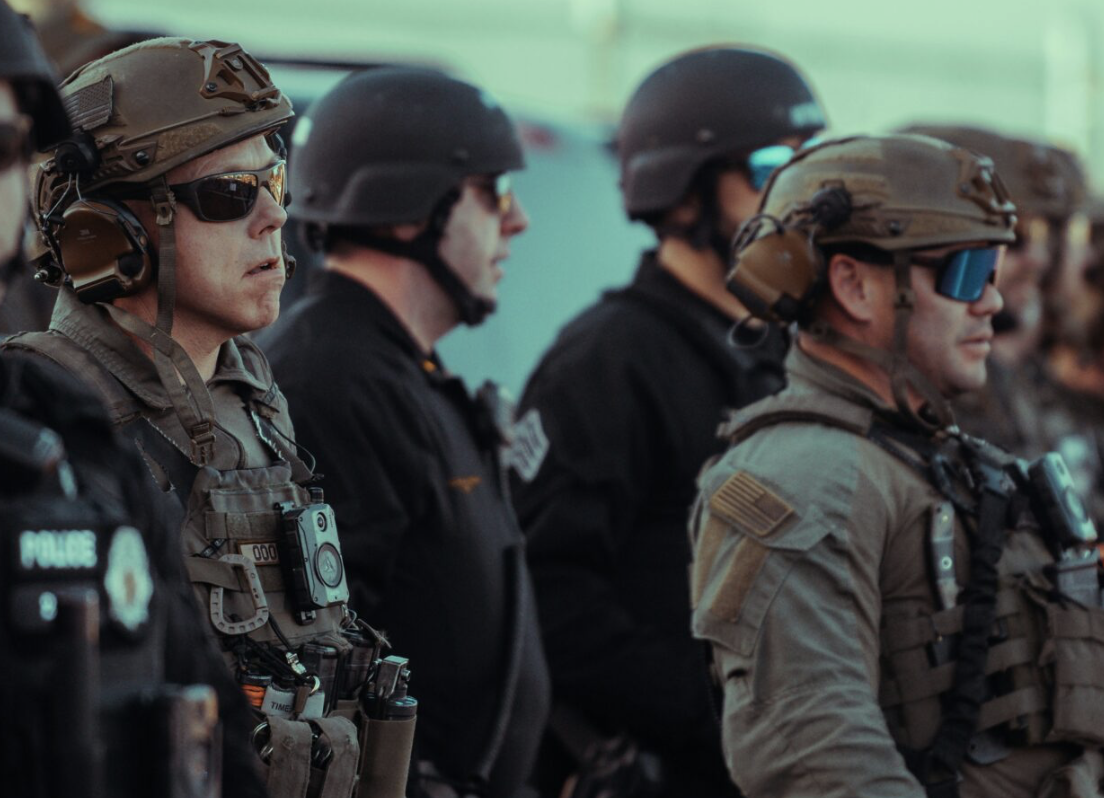
After Nicole Good recklessly tried to use her car to interfere with the lawful activities of ICE agents in Minneapolis, she sought to escape by pointing the car directly at an officer and accelerating. Video shows her tires positioned directly at him as she floored the accelerator, and the shot that the officer was forced to fire in those milliseconds went through her front windshield, killing her.
If an officer has an objectively reasonable belief that someone’s actions put the officer or others at risk of death or any serious bodily injury, the law empowers that officer to use deadly force to stop that threat.
I’ve worked on dozens of officer-involved shootings, and those of us who do this work know the standard comes straight from the U.S. Supreme Court: if an officer has an objectively reasonable belief that someone’s actions put the officer or others at risk of death or any serious bodily injury, the law empowers that officer to use deadly force to stop that threat.
A police officer in Ohio was in a nearly identical situation when an escaping suspect accelerated into the officer, lifting his feet off the ground. He stopped the threat with one shot through the windshield, yet politically motivated prosecutors still charged him with murder. The jury quickly acquitted him. Why? It should be obvious: the law authorizes an officer to use deadly force when a deadly weapon — a 4,000-pound car — is aimed directly at him and moving.
Many prominent Democrats immediately made things worse by claiming, despite manifest evidence to the contrary, that the ICE officer committed murder. The president weighed in, as well. Prudent leaders avoid bombast on criminal matters that are a few hours old, but such discretion now seems as antiquated as a daily newspaper on the front porch.
As a politically tinged, symbolic stunt, prosecutors in Minneapolis will likely charge the officer in state court. Luckily, such cases can be removed to federal court, where a fairer process exists.
Relentless agitation has turned destructive, even lethal, convincing one woman that those enforcing the law are responsible for the law itself. It’s sad and maddening all at once.
It’s past time for those who seek change to respect the rule of law (and those who enforce it), express their dissent peacefully, and work through the democratic law-making process. That’s how responsible adults act.
Changing a law is intentionally tedious: committees, hearings, and votes. It’s slow, but the deliberative process and consensus-building cement legitimacy. Those opposing a law ought to change it through elections and legislation — not through threats and chaos. Civic dissent should be loud but lawful; anything else is a spark in a dry forest.
READ MORE from Mark R. Weaver:
Hillary and Obama Out-McCarthied McCarthy
Mark R. Weaver is an Ohio prosecutor and a former spokesman for the U.S. Department of Justice. X:@MarkRWeaver

Police Leaders Are Wilting Under Scrutiny—It's Time to Train Them Better
It’s been a bad month for public communications responses to high-profile violence.
Following the mass shooting at Brown University, many Americans criticized Providence police and city leadership for their communications response, and for good reason. First, officials claimed there was no immediate threat even while admitting the shooter was still at large. Then, when asked whether the suspect is still nearby, the mayor responded ”honestly, we have no way of knowing.” If they have no idea if the suspect is still in the city, how can they say there’s no danger? The chief also had to be corrected mid-answer on whether they have footage from both inside and outside the building. Later, the chief said he wasn’t going to comment on the scarcity of surveillance or what the shooter yelled before he started killing.
Saying any version of “no comment” is about as big a crisis communications blunder as saying “we’re hiding the truth” – both aggravate the public and sow distrust.
There’s more.
The Los Angeles Police Department's handling of the initial press briefing following the tragic stabbing deaths of filmmaker Rob Reiner and his wife was also disorganized and evasive. The briefer repeatedly declined to confirm basic details already leaking to media outlets, including the victims' identities, despite family confirmations. He insisted that no suspect was being pursued, even as reports emerged that their son, Nick, had been questioned.
These instances have exposed a glaring weakness: police leaders wilting under media scrutiny, fumbling responses that erode public confidence when it's needed most. In these pressure-cooker moments, chiefs and sheriffs often come across as evasive or unprepared, turning tragedies into PR disasters. But here's the kicker: the skill set for preventing and investigating crime is worlds apart from establishing credibility in a crisis. When leaders excel at the former but flop at the latter, it leaves communities distrustful and officers demoralized.
I've handled law enforcement crisis communications at the highest levels, including as a spokesman for the U.S. Department of Justice, and I've seen what works and what doesn't. From coordinating with federal agencies during national incidents to advising on local flare-ups, the playbook is clear: Preparation prevents panic.
Social media pressure and the speed of life make it worse. Misinformation and rumors spread faster than ever before. The need to manage that is harder, with viral clips and armchair experts igniting outrage before facts emerge. A single social media post can morph a routine stop into a national scandal, forcing leaders to respond in real-time without derailing investigations.
While advising police leaders in 31 officer-involved shootings in just the last five years, I’ve learned there really is a right way to communicate in these high-profile cases.
So I train police chiefs, sheriffs, and other government leaders to update the public in a way that maintains transparency and accountability. We drill scenarios, honing messages that inform without inflaming.
It's a myth that police leaders have to say “no comment” or refrain from providing basic details. Because I've prosecuted a wide range of crimes, including murder, I know what law enforcement leaders can say without undermining the integrity of the investigation and prosecution.
They don’t need to release every bit of information and detail all the evidence, but that amount of material is rarely needed to preserve trust. A well-timed update can defuse tension without tipping hands to suspects or tainting jury pools.
When preparing to tell the public about a high-profile crime, leaders should identify the best channels of communication (it's not always a news conference) and the target audiences. Social media blasts work for quick alerts; community meetings build rapport in tense neighborhoods.
Leaders who know their community can identify the most likely questions and predict the information that will help the public feel confident that the right people are in charge. The common ones include: “What happened?” “Who's accountable?” “Am I at risk?”
At a time when police are under attack from those who sneer at the rule of law, leaders must work harder to show why their mission matters. Critics paint cops as villains, ignoring the daily heroism in chaotic streets. But effective communications can flip the script.
The recent poor performances underscore the need for leaders who are competent in police work and at least as competent in crisis communications work.
Good policing depends on public trust. And public trust depends on leaders who know what to say, when to say it, and how to say it -- before the crisis hits. That’s because crisis communications isn’t a distraction; it’s now a core function of law enforcement.

Reclaiming America’s Story, Before Her 250th Birthday
Ben Franklin knew God had a plan for America. He told the Constitutional Convention, “the longer I live, the more convincing proof I see of this truth that God governs in the affairs of men. And if a sparrow cannot fall to the ground without his notice, is it probable that an empire can rise without his aid?”
Advertisement
George Washington agreed, writing to a friend, “The hand of Providence has been so conspicuous in all this.”
These giants of our founding saw divine fingerprints on America's birth; a nation forged not just by human grit but by providential grace. Yet, as America nears its 250th birthday, we’re still subjected to revisionist accounts by historians who let personal ideology guide their conclusions.
Their accounts drip with presentism, fixating on flaws while ignoring the revolutionary ideals that make us exceptional. Their echo chamber rings with the same off-key refrains about slavery and purported systemic racism.
Let’s be clear: to all their shame, nearly every country in the world saw slavery within its borders. Some still do. Yet America is the only major country that ever fought a civil war to end it. Chattel slavery in southern states doesn’t define America; how we ended it -- and that we ended it — does.
Those who falsely allege systemic racism here ignore our constitutional provisions that guarantee equal protection of the law. It took more than a century for those promises to be kept, but they’ve never been stronger. Instances of racism exist because sin exists, and no country has done as much as America to quell it. Immigrants of every skin color seek to come here because they recognize that racism doesn’t define America -- the muscular body of law that redresses individual cases of it does.
No nation populated by imperfect humans can ever be perfect, but America stretches closest to that unreachable goal.
Which brings us to the latest American Revolution miniseries, offered up by Ken Burns, who never misses a chance to turn American history into a guilt trip. This PBS opus opens with a land acknowledgment nodding to native tribes, then pivots to wildly claim that the Revolution was somehow about race.
It even suggests we cribbed American government from Iroquois models, downplaying the Enlightenment thinkers and Greek and Roman models that shaped our Constitution. Burns smears George Washington as a flawed opportunist, petty toward loyalists, and fixates on what he thinks are marginalized voices at the expense of core events.
A more clear-eyed view tells us the Revolution wasn't a racial reckoning; it was a bold leap toward liberty and the cornerstone of a republic built on the self-evident notionthat all human rights come from God.
The 1619 Project, written by a race-obsessed reporter who sought to distort the traditional view of U.S. history, claimed our founding was about preserving slavery, not self-government. While the Blame America First mob celebrated this misleading mélange, it was fact-checked by more sober experts. Theydebunked its capitalist-slavery links and Revolution-as-pro-slavery spin as ideological fiction.
But that New York Times effort has company. Even Wikipedia features hard-left partisanship with large helpings of bias in entries about the United States. Call it Woke-a-pedia: where it seems like every entry ends with “…and it’s America’s fault."
Too much of this ideologically driven anti-American history is an unappetizing breakfast of Woke-Flakes: crunchy outrage with zero factual nutrition. As we celebrate 250 years, let's honor the real story. It’s one of striving toward ideals, guided by providence and grit. Our founders built a republic worth defending, and Americans are called to hand down the truth about God’s providence in our nation’s history to future generations. That includes speaking out against skewed portrayals while explaining it to the civic leaders of tomorrow. It’s why – for the upcoming celebration of America’s 250th birthday – I wrote a children’s book: “God Bless America, 250 Years Strong.”
In it, I highlight touchpoints early generations knew by heart, but most young people haven’t heard. America’s history is not perfect, but it’s nobler than any other. If we fail to pass that on, the loudest voices will keep rewriting it until our own children believe America should be the villain of its own story.
Editor's Note: President Trump is leading America into the "Golden Age" as Democrats try desperately to stop it.
From Puff Daddy to Prison Daddy
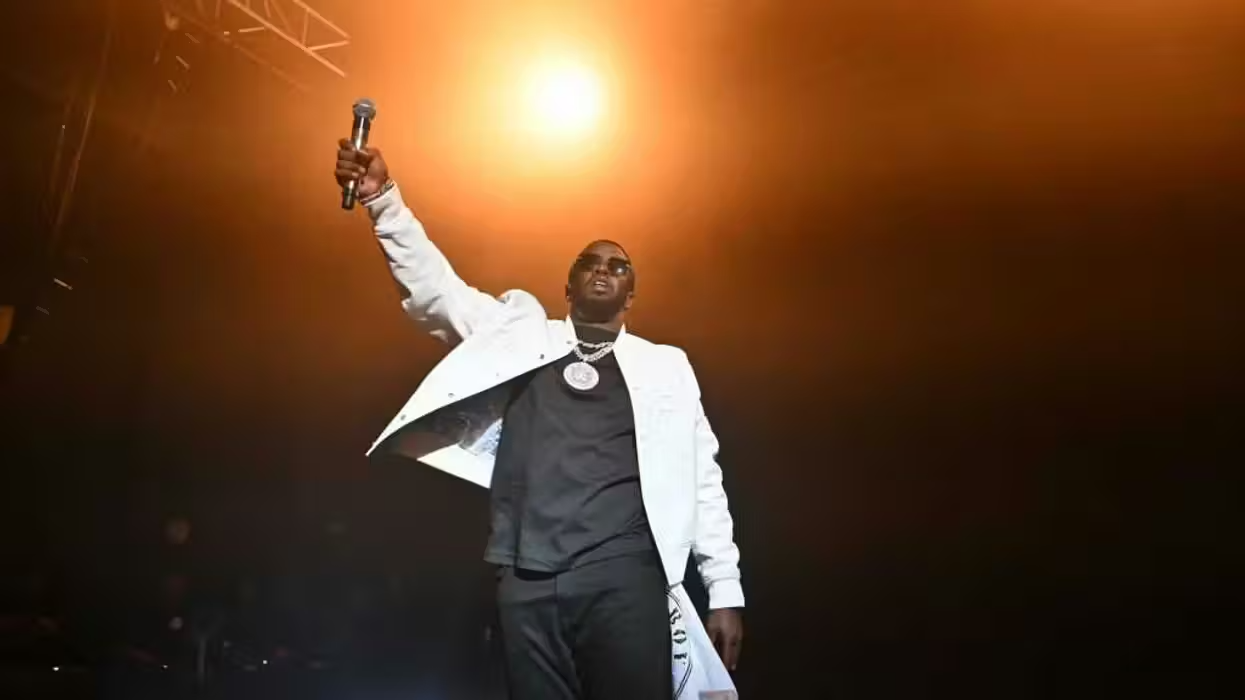
Sean “Diddy” Combs — mogul, producer, and architect of a billion-dollar brand — was sentenced Friday to more than four years in federal prison for his despicable crimes against women. The sentence won’t shatter the glossy mythology he’s sold for decades. The headlines will obsess over the punishment and whether justice was done. But the deeper story is the culture he built — and that millions of Americans continue to bankroll.
Let’s stop pretending: No other major American music genre has a criminal record like rap. This isn’t a bad apple. It’s a poisoned orchard.
No other genre has turned crime, misogyny, and hatred for order into cultural virtues.
Tay-K was convicted of murder in 2019 and again in 2020 for a separate shooting. He’s serving 55 years. South Park Mexican is doing 45 years for child sexual assault. C-Murder? Life for killing a teenager. Big Lurch is doing life for murder and cannibalism. B.G. just got out after 14 years for weapons and witness tampering. Chris Brown — who still charts — pled guilty to felony assault of Rihanna and keeps finding trouble. Shyne served nearly a decade for a nightclub shooting that Diddy himself may have committed. Kodak Black, Max B, Crip Mac, Flesh-N-Bone, Big Tray Deee — all convicted felons.
That’s not some obscure playlist. That’s the soundtrack.
Try compiling a similar rap sheet for classical violinists, country balladeers, or pop crooners. Even rock, infamous for its drug excesses, never reached this level of violence or degradation.
Still think this is just about “personal behavior”? Listen closer.
Even when not committing crimes, many hip-hop “artists” glorify them. Anti-police, anti-woman, anti-civilization — these aren’t exceptions but industry standards. “F**k the police” wasn’t a phase. It was a forecast. “Shoot a cop, that’s my solution” isn’t satire. It’s strategy.
You don’t have to dig to find chart-toppers dripping with misogyny, death threats, and celebrations of drug-dealing and street violence. This isn’t fringe content. They’re topping the Billboard charts.
In what other industry could someone openly brag about pimping women, selling narcotics, or “sliding on ops” and still land Super Bowl halftime shows, Sprite deals, and White House invitations?
Defenders call it “storytelling,” “street realism,” or “art.” But these aren’t neutral observations. They’re recruitment ads for a culture of moral rot. Many rappers don’t just depict criminality — they embody it, and their fans reward them for it.
Every stream, download, and ticket sale is a vote for decadence — a few more dollars for the next defense attorney, a little more validation for the notion that responsibility is oppression and chaos is authenticity.
Even academics have noticed. Law journals have dissected the way hip-hop glorifies violence while its corporate enablers polish the packaging. The same elites who decry “toxic masculinity” will nod along to lyrics calling women “bitches” and “hoes.” The same corporations that preach “inclusion” will bankroll artists who sneer at civilization. The same politicians pushing gun control will campaign beside men who made fortunes romanticizing drive-bys.
Yes, hip-hop has artistic power. It grew from hardship and gave voice to the voiceless. But no other genre has turned crime, misogyny, and hatred for order into cultural virtues.
There’s a difference between reflecting reality and selling it — between giving voice to pain and turning pain into product. Today’s rap industry isn’t holding up a mirror to society. It’s pointing a gun at it.
The Diddy sentencing should be a wake-up call. It isn’t just a reckoning for one man. It’s a moment of clarity for a culture that has lost its moral compass.
The question isn’t only who committed the crime. It’s who bought the album.